
STEM Opportunities: Encouraging Exploration and Curiosity in Middle School

stem in middle school

Introduction

Middle school marks a critical phase in education where students transition from basic understanding to deeper intellectual engagement, particularly in Science, Technology, Engineering, and Mathematics (STEM). This stage is crucial for sparking interest in STEM through innovative and practical learning experiences.

The Importance of STEM in Middle School

Middle school is an ideal time to engage students in STEM because their curiosity peaks and they begin to grasp complex problems that these subjects present. Engaging students in activities that connect their everyday experiences with science and technology not only maintains their interest but also helps develop critical thinking skills which are essential for future academic and career success​ (STEM in the Middle)​.

Practical Applications and Real-World Problem Solving

At the heart of effective STEM education is its emphasis on real-world applications. This approach not only makes the learning process engaging but also relevant. Schools can enhance their STEM curriculum through hands-on projects like robotics or environmental science clubs that solve real community issues, thereby making the lessons more tangible and impactful​.

STEM and Career Preparation

Exposing students to STEM fields can significantly influence their career paths, with many future jobs requiring a solid foundation in these areas. Middle school programs that introduce students to technology and engineering can spark early interest in these high-demand fields​ (STEM Education Guide)​. Additionally, practical experiences in computing and applied sciences can set students on a path to fulfilling and lucrative careers​ (Harvard Gazette)​.

Edison Academy and Woodbridge Academy

Local programs such as those at Edison Academy and Woodbridge Academy offer specialized pre-college preparation that aligns well with STEM objectives. At Edison Academy, the focus is on integrating technology with traditional learning to enhance students’ problem-solving skills. Woodbridge Academy, however, focuses on allied health and sciences, providing a collaborative environment that prepares students for advanced careers in healthcare and scientific research.

Supporting Magnet and Academy School Prep at PALS

At PALS Learning Center, we understand the importance of excelling academically throughout middle school to prepare for specialized STEM schools. Our comprehensive Math, English, Reading and Writing programs are specifically designed to help students achieve and maintain high grades, providing a solid foundation for academic success. These programs not only prepare students for the challenging entrance exams required by Magnet and Academy schools but also give them a competitive edge in their applications.

Specialized Test Prep for 8th Graders

Additionally, PALS offers targeted test prep classes specifically designed for 8th-grade students preparing for Magnet and Academy school admissions in the fall academy year. These classes support students in excelling on the entrance exams required by these schools, ensuring they are well-prepared to meet the demands of advanced educational opportunities and excel in their future academic endeavors.

Conclusion

The integration of STEM into middle school curricula is not just about preparing students for the next educational step; it’s about opening doors to new opportunities that align with the evolving job market and technological advancements. Programs and schools that offer advanced STEM education, like Edison and Woodbridge Academies, play a pivotal role in shaping the future of our students and the broader societal landscape.

For more detailed information about the programs at Edison Academy and Woodbridge Academy, you can visit their respective websites Edison Academy and Woodbridge Academy.


What’s New on the Reading & Writing Section of the Digital SAT?

massage therapy services

The SAT has been a cornerstone of college admissions for over 60 years. However, the landscape of education and college admissions is evolving, and the SAT is adapting to keep pace with these changes.

Get ready to go digital.

The Reading and Writing section of the SAT will be administered electronically starting in 2024. This doesn’t mean that students can take the exam from home, though — testing will still take place at designated schools or official test centers, but instead of the traditional paper and pencil, students will answer questions on a computer or tablet using a secure app called Bluebook. The College Board will provide devices to students who don’t have their own.

More personalized test experience

The digital format offers a cool new feature called “multi-stage adaptive design.” Here’s how it works: After completing the first set of questions, a computer analyzes the answers. Based on the test taker’s performance, the difficulty level of the following questions is adjusted. This tailors the test to the student’s individual skill level and creates a more accurate assessment of their knowledge.

Shorter test, more focus

There are significant changes to the Reading and Writing section in the revised SAT. Test-takers will spend 32 minutes tackling 27 questions in each part, for a total of 64 minutes. This is quite a change compared to the previous format, which took a total of 1 hour and 40 minutes for both sections. In fact, the old reading section alone was as long as both new parts combined.

Don’t worry if all of these changes sound overwhelming. You can enroll your child in a digital SAT prep course to help them become familiar with the new format and learn how to answer questions efficiently.

A digital SAT prep course can offer a vast library of practice questions that mimic the format and difficulty of the actual SAT. This allows your child to become comfortable with the test style, identify their timing strengths, and develop strategies for tackling different question types. These courses also incorporate interactive elements like video lessons, gamified exercises, and instant feedback to keep your child engaged and motivated throughout the learning process.

Our digital SAT prep course at PALS Learning Center is designed to help students excel in the reading and writing section of the SAT so they can achieve their college goals.

Call our team at +1 732 777 7997 to inquire about our digital SAT prep course.

The Benefits of Long-Term Private Tutoring: Unveiling the Top Rewards

unveiling the top rewards

Traditional classrooms often struggle to cater to diverse learning styles. Limited time and resources can restrict teachers from using a variety of instructional methods. This mismatch between teaching style and how a student learns can leave many students feeling lost and unsupported.

This is where tutoring comes in. If you’re currently wondering if tutoring in Edison is a good investment for your child’s future, the following benefits may help you decide.

  1. Tutors can tailor their teaching methods to your child’s learning style.

A private tutor can design lessons that suit how your child likes to learn. For instance, does your child thrive on seeing things to understand? A tutor can incorporate engaging pictures, diagrams, and even hands-on activities to bring concepts to life. Does your child learn best by listening? A tutor can create engaging explanations and discussions and even use audio resources.

  1. Tutors can focus on your child’s individual needs

In a busy classroom setting, it can be challenging for teachers to give each student the individualized attention they deserve. But with tutoring in Edison, your child gets all the attention. It provides a one-on-one or small group environment that allows the tutor to fully focus on your child’s specific needs and learning style.

Are they struggling with a particular topic? Tutors can dedicate extra time to areas your child finds challenging to ensure that they grasp the material before moving on.

Tutors can also identify your child’s strengths and weaknesses early on, allowing them to tailor a targeted approach that builds a strong foundation for future learning success. With a personalized approach and focused attention, your child can learn and retain information at a faster pace compared to a larger class setting.

  1. Tutoring teaches accountability and responsibility

Working with a tutor allows your child to collaborate on setting achievable learning goals, giving them a sense of ownership and responsibility for their academic journey. By taking an active role in their learning, your child develops valuable skills like self-awareness, goal setting, and a love for tackling challenges — all of which benefit them far beyond the classroom.

For expert and reliable tutoring in Edison, PALS Learning Center offers customized programs for students of all ages. With our personalized approach, we ensure that your child gets the help they need to excel academically and reach their full potential.

Call us at +1 732 777 7997 to learn more about our tutoring in Edison.

How Do You Know Your Child Needs Tutoring?

your-child-needs-tutoring

Some subjects are trickier than others, and for many students, Algebra 1 falls in that category. If you see your child struggling with this subject, finding an experienced Algebra 1 tutor might just be the perfect solution.

PALS Learning Center offers personalized tutoring that not only focuses on math but also covers a wide array of subjects, including English, reading, writing, and Advanced Placement courses, for high schoolers. Our team creates customized learning experiences that sync with the local school curriculum, enhancing the concepts your child encounters in class. This tailored approach proves invaluable for quiz and test preparation as well as boosting your child’s confidence and overall academic results.

Does your child really need an Algebra 1 tutor?

Whether it’s to get ahead or to catch up, an Algebra 1 tutor can help your child achieve their goals. Here are some signs they might benefit from tutoring services:

  • Struggling with homework – If homework time feels like a constant battle, it might be a sign your child is getting easily distracted or struggling to keep up with the workload. An Algebra 1 tutor can provide the focused attention needed to tackle homework challenges head-on, helping your child manage their time more effectively and complete assignments on schedule.
  • Falling behind in class – When a student can’t seem to catch up despite extra study time, it’s often a sign they haven’t mastered key concepts. An Algebra 1 tutor from PALS Learning Center can offer the specialized guidance your child needs to stay engaged and improve their grades.
  • Battling low self-esteem – It’s not uncommon for students to feel down about their abilities, especially in subjects they find difficult. Working with an Algebra 1 tutor near you can help rebuild your child’s confidence, showing them they can overcome academic hurdles.
  • Losing interest in school – If your child is disenchanted with school due to poor performance, a tutor can help reignite their interest by breaking down complex concepts into more understandable segments. Working at your child’s pace, an Algebra 1 tutor ensures they grasp and retain the material.
  • Worrying about upcoming exams – Is your child struggling with exam anxiety in Algebra 1? Our tutors at PALS Learning Center can help. With a focus on building confidence and understanding, our experienced Algebra 1 tutors have a proven track record of helping students achieve their goals.
  • Catching up after a break – Absences due to illness or family emergencies can leave a student playing catch-up. An Algebra 1 tutor can ease this transition and help your child bridge the gap at a manageable pace.

Ready to support your child with the help of an Algebra 1 tutor? Don’t hesitate to reach out to us at PALS Learning Center. Give us a call at +1 732 777 7997 to explore how we can support your child’s journey through Algebra 1 and beyond.

Navigating the Choice: Digital SAT (DSAT) vs. ACT

Navigating the Choice: Digital SAT (DSAT) vs. ACT

Choosing between standardized tests can feel like standing at a crossroads with multiple paths leading in different directions. The decision between the new Digital SAT (DSAT) and the ACT is one such fork in the road for students aspiring towards higher education. Both assessments serve as yardsticks for gauging college readiness, yet they diverge significantly in their formats, content, and strategies. To aid in this decision-making process, let’s embark on a comprehensive breakdown of these two examinations.

Understanding the Format

DSAT:

The Digital SAT is a testament to the evolving landscape of standardized testing, fully embracing the digital realm. Clocking in at a succinct 2 hours and 14 minutes, it offers a streamlined experience compared to its counterpart. The DSAT employs an adaptive approach, dynamically adjusting the difficulty level based on the test-taker’s performance. It consists of two primary sections: Reading & Writing and Math. Notably, students are afforded more time per question, averaging approximately 1 minute and 22 seconds.

ACT:

Contrastingly, the ACT adheres to a traditional paper-based format, spanning a longer duration of 2 hours and 55 minutes. It presents fixed-difficulty sections encompassing English, Math, Reading, Science, with an optional writing component. However, the ACT grants significantly less time per question, allotting approximately 48 seconds on average.

Delving into Content

DSAT:

One of the hallmark distinctions of the DSAT lies in its omission of a standalone Science section. Instead, it intricately weaves scientific concepts within the Reading & Writing and Math sections. This integration emphasizes analytical prowess, often manifested through the interpretation of concise passages and graphical representations.

ACT:

Conversely, the ACT features a dedicated Science section, assessing a broader spectrum of scientific knowledge and reasoning abilities. Moreover, it presents longer reading passages, each accompanied by multiple questions, fostering a comprehensive understanding of the subject matter.

Navigating the Decision

In contemplating which examination aligns best with your academic journey, several pivotal factors merit consideration:

Strengths and Weaknesses:

Evaluate your individual proficiencies and areas for growth. If grappling with time constraints during assessments poses a challenge, the DSAT’s extended per-question duration may offer a respite. Conversely, if you boast a penchant for scientific inquiry, the ACT’s specialized Science section might serve as a platform to showcase your prowess.

Learning Style:

Reflect on your preferred modality of learning and test-taking. Do you thrive amidst succinct, targeted passages, or do you excel at delving into intricate, multifaceted narratives? This distinction between shorter, focused content (DSAT) and more extensive, in-depth analysis (ACT) can illuminate the optimal choice for your academic disposition.

College Requirements:

Consult the prerequisites and preferences of your prospective institutions. While most colleges accept both DSAT and ACT scores, certain establishments may exhibit a proclivity towards one over the other. Thus, conducting thorough research and ascertaining the standardized testing landscape of your target schools is paramount.

Embracing Empowerment

Ultimately, the journey towards standardized testing should be imbued with a sense of empowerment and confidence. The most efficacious test is not dictated solely by external factors but rather by an intrinsic alignment with your academic preparedness and comfort. Both the College Board (SAT) and ACT offer an array of official practice tests and resources to aid in this discernment process. Furthermore, leveraging the expertise of college counselors or academic advisors can provide personalized insights and recommendations tailored to your unique circumstances.

In traversing the labyrinthine terrain of standardized testing, remember that the path you tread is not merely a means to an end but a voyage of self-discovery and growth. By wielding discernment and conviction, you can navigate this juncture with clarity and assurance, embarking upon a trajectory poised for success.

Need help preparing for the DSAT? Feel free to reach out to us.

Got Your Grades? Here’s What You Can Do Next

Got your grades

After looking over your child’s latest report card, you might notice some grades aren’t quite what they used to be. Perhaps your child needs a nudge in improving their study habits, or maybe they need a bit more help. For example, if their English and Reading grades have slipped, it’s a great idea to consider bringing in a writing tutor from PALS Learning Center right here in Piscataway.

It’s also wise to sit down with your child and chat about their grades. This conversation can shed light on any struggles they’re facing, allowing you to provide the right support to help them navigate these challenges and encourage them to take responsibility.

Beyond finding a tutor, here are a few more strategies to support your child’s learning journey:

Evaluate their study habits.

Many students don’t know how to develop effective study habits. As a parent, you can help your child maintain a regular schedule (whether studying at home or with a writing tutor in Edison) and ensure they stay on track to achieve better grades for the next term.

Show the importance of accountability.

Your child needs to develop and have accountability in their academics. Sometimes, it’s best to work with a tutor for assistance in finding ways to better organize their time to complete their homework.

Encourage a positive outlook.

Most students have at least one topic or subject they find challenging. This is normal. It’s important to encourage your child to recognize their strengths and areas for improvement, fostering a positive attitude towards learning. With your support and guidance from a tutor, your child can understand that assistance is always at hand. This realization can motivate them to embrace the help offered, knowing there are people ready to invest their efforts in helping them achieve success.

Does your child need a writing tutor in Edison? Contact PALS Learning Center. We have over 16 years of experience helping K-12 students unlock their academic potential to achieve remarkable success. Call +1 732 777 7997 to give your child the educational support they need now.

Simple Steps to Encourage Independent Learning at Home

Simple Steps to Encourage Independent Learning at Home

Independent learning can improve your child’s academic journey. You can help your child develop this skill by teaching them to be self-aware and self-motivated. Tutoring in Edison can also play a vital role in this regard. Trained tutors are equipped to pinpoint your child’s specific learning requirements and establish clear learning goals. They can also create tailored educational materials and tools and regularly evaluate your child’s progress.

But why is independent learning important to young learners? Because it can benefit them in many ways, from instilling a sense of self-discipline to boosting their confidence. It also enhances their cognitive abilities—particularly their creativity, problem-solving, and critical thinking skills.

Beyond this, independent learning can boost a child’s self-esteem. It encourages a sense of achievement, competence, and autonomy and helps your child develop a growth mindset. What’s more, independent learning is a skill that children can use throughout their lives. As you know, 21st-century skills and knowledge are constantly changing, but independent learners are equipped to keep up with them.

Tutoring services in Edison can certainly help your child develop independent learning skills. But as a parent, you can also do your part by being supportive and ready to provide appropriate guidance, feedback, and resources. Here are tips for creating a more supportive home environment that promotes independent learning:

  • Avoid helping your child immediately when they run into minor or challenging setbacks.
  • Pretend you don’t know the answer to their questions to encourage them to think.
  • Suggest how they can improve.
  • Encourage them to share ideas with you and their peers.
  • Promote self-evaluation.
  • Keep challenging your child with extra tasks.

Pick the right tutor in Edison, Piscataway and surrounding.

We offer comprehensive and personalized tutoring in Edison and beyond for subjects like math and English. We also offer Academy and Magnet School Prep, NJSLA Test Prep and a SAT Prep course, so you don’t have to look elsewhere.

Connect with us here at PALS Learning Center by calling +1 732 777 7997 or schedule an appointment using this website.

Demystifying the NJSLA: Your Guide to Test Success (and Why Prep Matters!)

Demystifying the NJSLA: Your Guide to Test Success (and Why Prep Matters!)

Hey, New Jersey students and parents! Feeling a little lost in the NJSLA jungle? Don’t worry, you’re not alone. Navigating standardized tests can be confusing, but fear not! This blog is your personal tool to clear the path and lead you towards NJSLA victory.

First things first: What is NJSLA?

It stands for New Jersey Student Learning Assessment, and it’s basically a series of tests that measure how well students are mastering key skills in English Language Arts (ELA), Math, and Science across grades 3–12. Think of it as a roadmap that shows how close you are to reaching college and career readiness.

Why is NJSLA important?

Here’s the deal:

  • Academic check-up: The NJSLA helps teachers and parents understand your strengths and weaknesses. It’s a chance to identify areas where you can shine and get the extra support you need.
  • School system snapshot: NJSLA results provide valuable insights into how schools are performing. It’s like a progress report for the whole education system!

So, about standardized test prep…

Is it worth it?

Absolutely!

Here’s why:

  • Familiarity breeds confidence: The NJSLA has a specific format and question style. Practicing beforehand takes the edge off test anxiety and gives you a strategic advantage.
  • Sharpen your skills: Test prep isn’t just about memorizing facts. It’s about honing your critical thinking, problem-solving, and time management skills—all crucial for academic and real-world success.
  • Boost your score: Let’s be honest, nobody wants to retake a test. Solid preparation increases your chances of acing the NJSLA the first time around, saving you time and stress.

But where do you find the best NJSLA prep?

That’s where PALS Learning Center comes in! We’re like your friendly NJSLA Sherpas, guiding you through the test with expert-led classes, personalized tutoring, and engaging practice materials. We make learning fun, effective, and stress-free!

Ready to conquer the NJSLA? Contact PALS Learning Center today and let’s turn test prep into a victory lap!

So remember, the NJSLA is not a monster under the bed. It’s an opportunity to showcase your skills and pave the way for a bright future. With the right preparation and a little help from PALS, you’ll be NJSLA-ready and unstoppable!

Let’s ace this together! Share this blog with your NJSLA buddies and spread the test-prep love.

Mastering the Art of Adding and Subtracting Unlike Fractions: A Comprehensive Guide

Mastering the Art of Adding and Subtracting Unlike Fractions: A Comprehensive Guide

Fractions are a fundamental concept in mathematics, and understanding how to add and subtract them is crucial for anyone navigating the world of numbers. When it comes to adding and subtracting fractions, handling like fractions may seem straightforward, but what about unlike fractions? In this blog post, we’ll delve into the intricacies of adding and subtracting fractions with different denominators, providing you with a comprehensive guide to mastering this essential skill.

Understanding Unlike Fractions

Before we dive into the operations, let’s revisit the basics of fractions. A fraction consists of a numerator (the top number) and a denominator (the bottom number). When the denominators are the same, adding or subtracting fractions is a breeze. However, when faced with unlike fractions (different denominators), we need to take additional steps.

Finding a Common Denominator

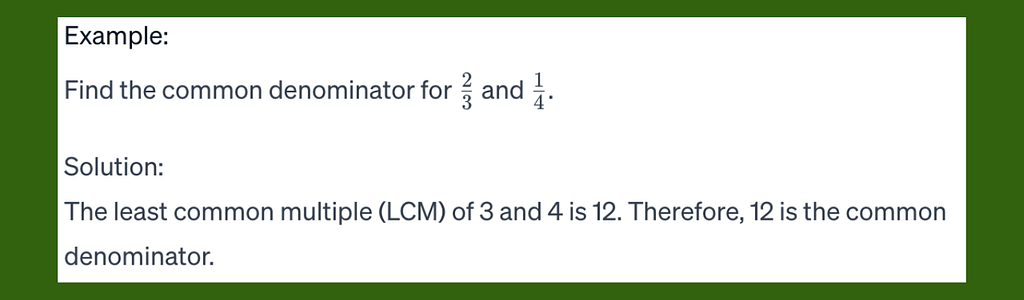
To add or subtract unlike fractions, the first step is to find a common denominator. The common denominator is the smallest multiple that both denominators divide into evenly. There are different methods to find a common denominator, such as using the least common denominator (LCD) or finding the least common multiple (LCM). We’ll explore both methods and discuss when to use each.

Adding Unlike Fractions

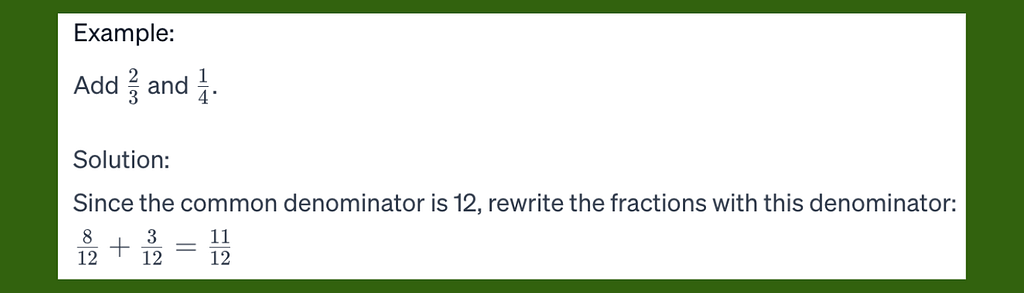
Once you’ve identified the common denominator, adding unlike fractions becomes a matter of aligning the numerators and performing the operation. We’ll walk through step-by-step examples, illustrating how to add fractions with different denominators.

Subtracting Unlike Fractions

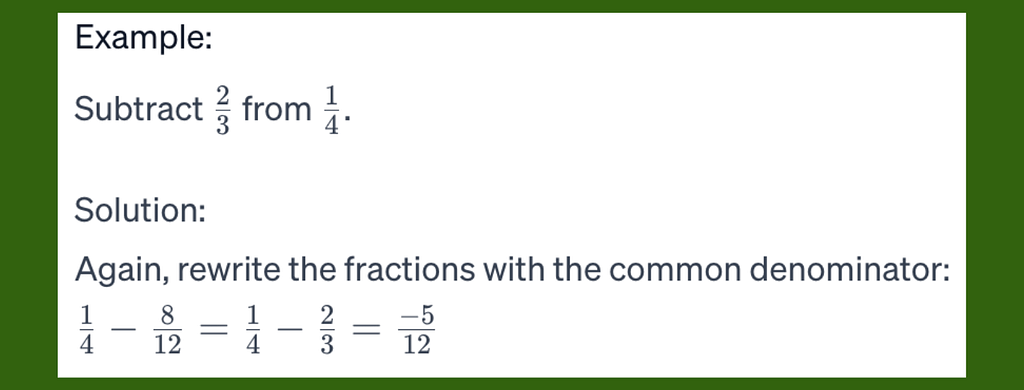
Subtracting unlike fractions follows a similar process. After finding the common denominator, align the numerators and perform the subtraction.

Conclusion

Mastering the art of adding and subtracting unlike fractions is a valuable skill that opens doors to a deeper understanding of mathematics. By following the steps outlined in this comprehensive guide, you’ll gain the confidence and proficiency needed to tackle fractions with different denominators. Embrace the challenges, practice consistently, and soon you’ll be a master of this essential mathematical concept.

Unlock your child’s mathematical potential! Seeking expert guidance in Math education? Look no further! Connect with PALS Learning Center today for personalized and effective tutoring. Transform math struggles into success stories. Contact us now!

Tips for Parents to Help Kids Stay Motivated and Engaged During Winter Break

tips-for-parents to-help-kids

School breaks are a welcome respite for kids and parents alike, but they can also be a time of boredom and inactivity. Winter break, in particular, can be challenging as the cold weather keeps kids cooped up inside. But there are plenty of things parents can do to help their children stay motivated and engaged during their time off from school.

Create a flexible schedule

Don’t let the break turn into a free-for-all. Having some structure to the day will help kids keep their minds active and avoid getting too bored. But don’t be too rigid, either. Allow for some flexibility and downtime so that kids can relax and recharge.

Encourage physical activity

Even though the weather is cold, it’s still important for kids to get regular exercise. Encourage them to go outside for walks or play in the snow. If it’s too cold to go out, there are plenty of indoor activities that can get them moving, such as dancing (TikTok can maybe help), playing games, or indoor sports.

encourage-physical-activity

Make time for creative activities

Arts and crafts, music, and writing are all great ways for kids to express their creativity and learn new skills. Set up a craft station at home, or take your kids to a local art class or music lesson.
make-time-for-creative-activities

Encourage reading

Encouraging kids to read is an excellent method for keeping their minds alert and involved. Encourage them to read books that they enjoy, whether it’s fiction, non-fiction, or graphic novels. You can also read aloud to your kids or take them to the library.

Plan outings and activities

Don’t just sit around the house all break. Get out and explore your community! Visit museums, take a hike, go ice skating, or attend a local holiday event.

plan-outings-and-activities

Limit screen time

While it’s okay for kids to have some screen time during the break, it’s important to limit it so that they have time for other activities. Encourage them to take breaks from screens every 20-30 minutes.

Make time for family time

The winter break presents a wonderful opportunity to enjoy meaningful moments with family. Make time for family games, movies, and outings.

Get enough sleep

Kids need plenty of sleep to stay healthy and focused. Make sure they’re getting enough sleep each night during the break.

Be patient and understanding

Winter break can be a challenging time for kids, especially if they’re used to a more structured routine. Be patient and understanding if your child is having a hard time adjusting.

Additional tips

Since you got this far on our blog, here are additional tips that you can also apply this winter break:

  • Involve your kids in planning activities for the break. This will give them a sense of ownership and make them more likely to participate.
  • Be flexible and willing to change plans if something isn’t working.
  • Don’t put too much pressure on your kids to be productive. The break is a time for them to relax and have fun.
  • Most importantly, focus on enjoying the time together as a family.

Make it fun!

The most important thing is to make the winter break fun for your kids. Let them choose activities that they enjoy, and don’t be afraid to get silly.

By following these tips, you can help your children stay motivated and engaged during the winter break and have a fun and memorable experience.