Mastering the Art of Adding and Subtracting Unlike Fractions: A Comprehensive Guide

Mastering the Art of Adding and Subtracting Unlike Fractions: A Comprehensive Guide

Fractions are a fundamental concept in mathematics, and understanding how to add and subtract them is crucial for anyone navigating the world of numbers. When it comes to adding and subtracting fractions, handling like fractions may seem straightforward, but what about unlike fractions? In this blog post, we’ll delve into the intricacies of adding and subtracting fractions with different denominators, providing you with a comprehensive guide to mastering this essential skill.

Understanding Unlike Fractions

Before we dive into the operations, let’s revisit the basics of fractions. A fraction consists of a numerator (the top number) and a denominator (the bottom number). When the denominators are the same, adding or subtracting fractions is a breeze. However, when faced with unlike fractions (different denominators), we need to take additional steps.

Finding a Common Denominator

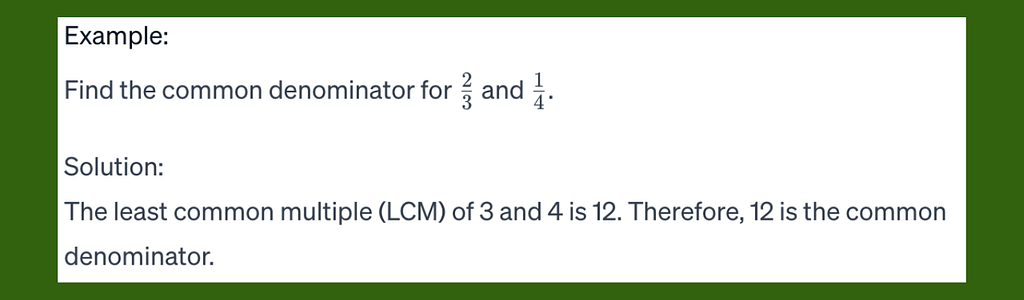
To add or subtract unlike fractions, the first step is to find a common denominator. The common denominator is the smallest multiple that both denominators divide into evenly. There are different methods to find a common denominator, such as using the least common denominator (LCD) or finding the least common multiple (LCM). We’ll explore both methods and discuss when to use each.
Adding Unlike Fractions

Once you’ve identified the common denominator, adding unlike fractions becomes a matter of aligning the numerators and performing the operation. We’ll walk through step-by-step examples, illustrating how to add fractions with different denominators.
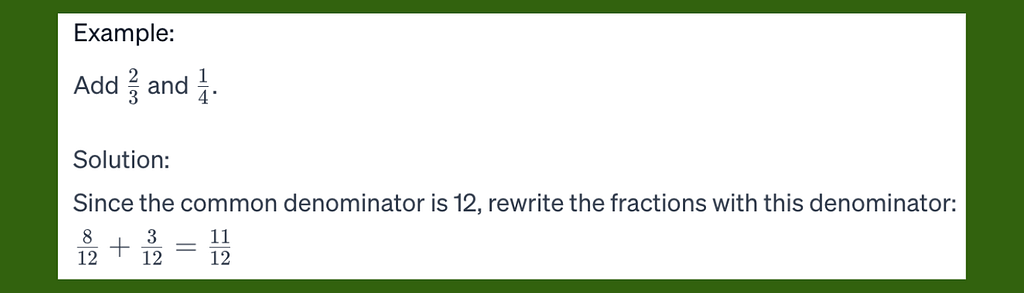
Subtracting Unlike Fractions

Subtracting unlike fractions follows a similar process. After finding the common denominator, align the numerators and perform the subtraction.
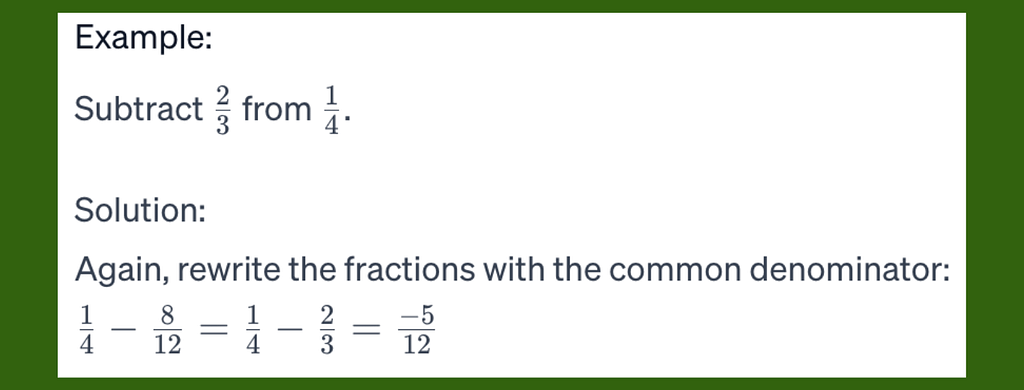
Conclusion

Mastering the art of adding and subtracting unlike fractions is a valuable skill that opens doors to a deeper understanding of mathematics. By following the steps outlined in this comprehensive guide, you’ll gain the confidence and proficiency needed to tackle fractions with different denominators. Embrace the challenges, practice consistently, and soon you’ll be a master of this essential mathematical concept.

Unlock your child’s mathematical potential! Seeking expert guidance in Math education? Look no further! Connect with PALS Learning Center today for personalized and effective tutoring. Transform math struggles into success stories. Contact us now!

A Step-by-Step Guide in Adding and Subtracting Like Fractions for Elementary Students

Step by Step Guide in Adding and Subtracting

Fractions are foundational concepts in mathematics, and mastering them is crucial for success in higher-level math. This guide provides a step-by-step approach to learning and understanding elementary fractions, making them less daunting and more enjoyable.

Understanding What Fractions Represent

A fraction refers to a part of a whole. Imagine a pizza cut into 8 slices. If you eat 3 slices, you have consumed 3 out of 8 parts, which can be written as the fraction 3/8.

Parts of a Fraction:

Numerator: The top number (3 in the example) represents the number of parts you have.

Denominator: The bottom number (8 in the example) represents the total number of parts in the whole.

Types of Fractions

Unit Fraction:

The numerator is always 1.

Examples: ¼ , ⅕ , ⅛ …

Proper Fraction

The numerator is smaller than the denominator

Examples: , , , …


Improper Fraction

The numerator is the same or bigger than the denominator.

Examples: , , , …

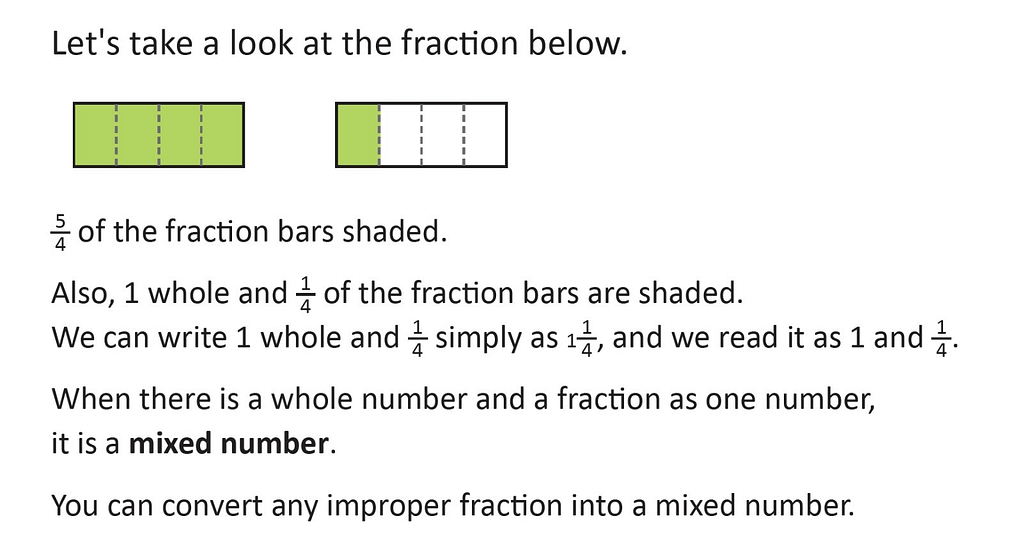
Mixed Number

When there is a whole number and a fraction as one number, it is a mixed number. 

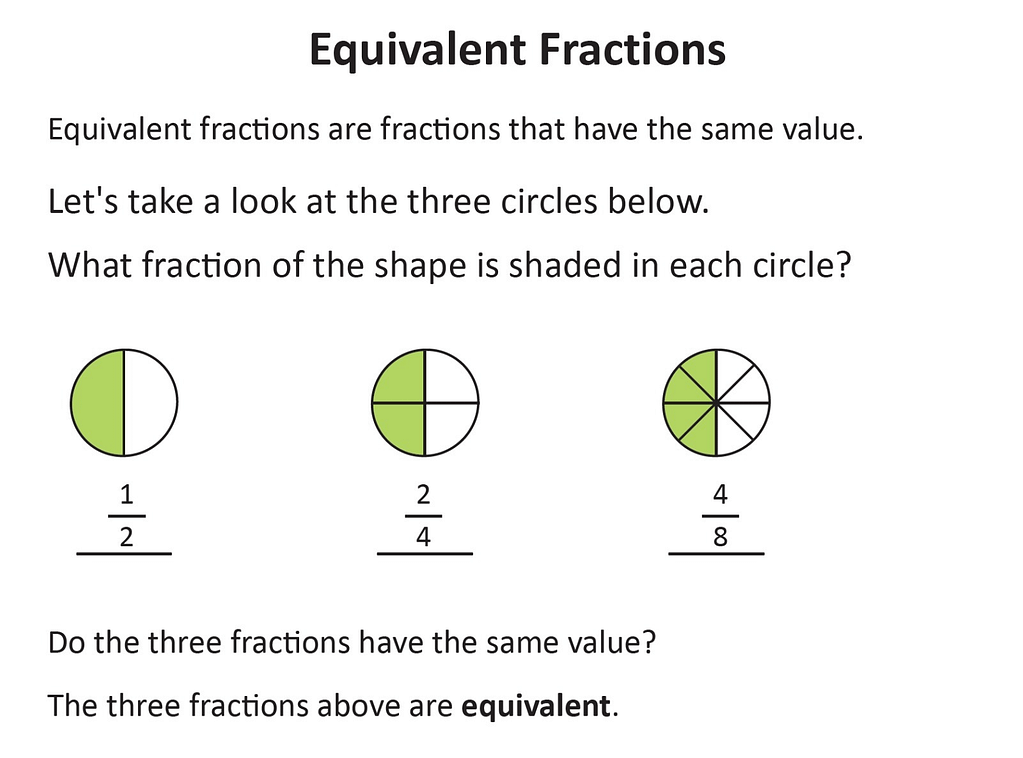
Take a look at the fraction below.

fraction

equivalent fractions

Visualizing Fractions

Using Models:

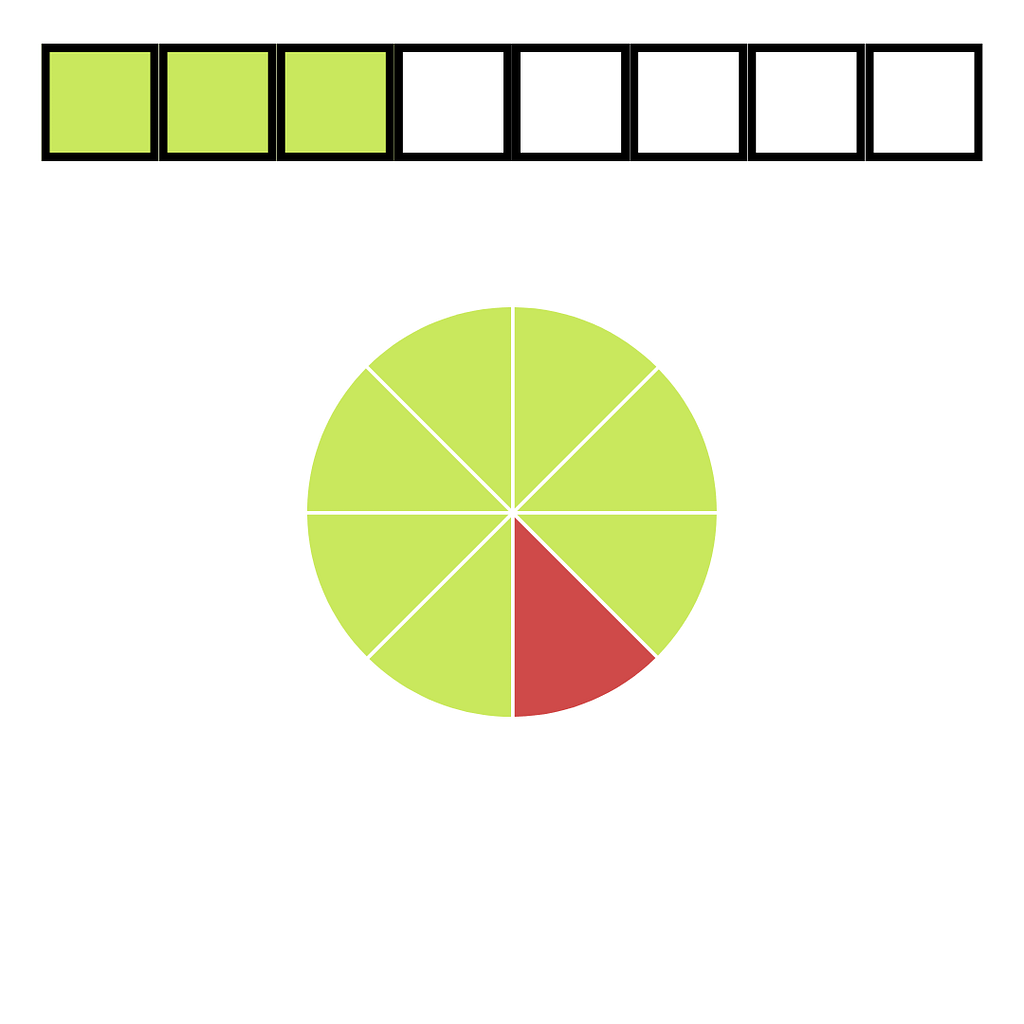
Fraction Bars: Divide a rectangle or bar into equal parts and shade the parts representing the fraction. For example, for , shade 3 out of 8 equal parts of the bar.

Circles: Divide a circle into equal sectors and shade the sectors representing the fraction.

fraction graph 4

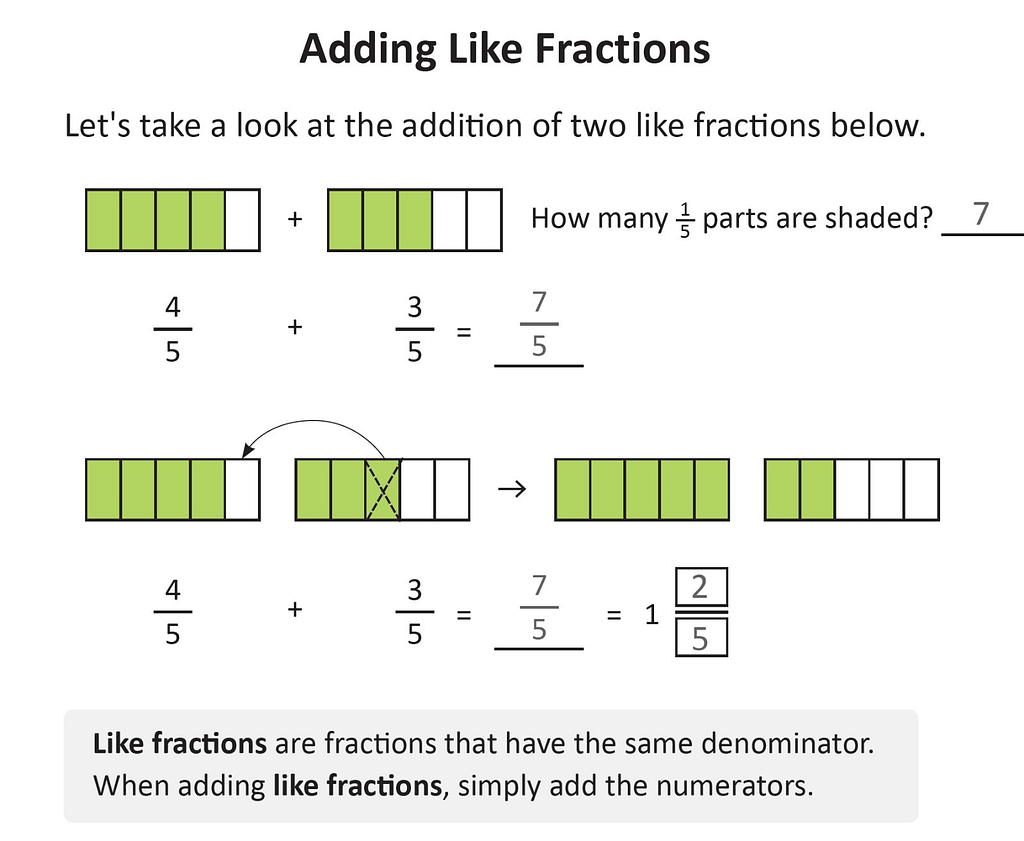
Adding and Subtracting Like Fractions

Like Fractions:

Like fractions are fractions that have the same denominator. When adding or subtracting like fractions, simply add or subtract the numerators while keeping the denominator unchanged. For example,  +  = .

Adding and Subtracting Like Fractions

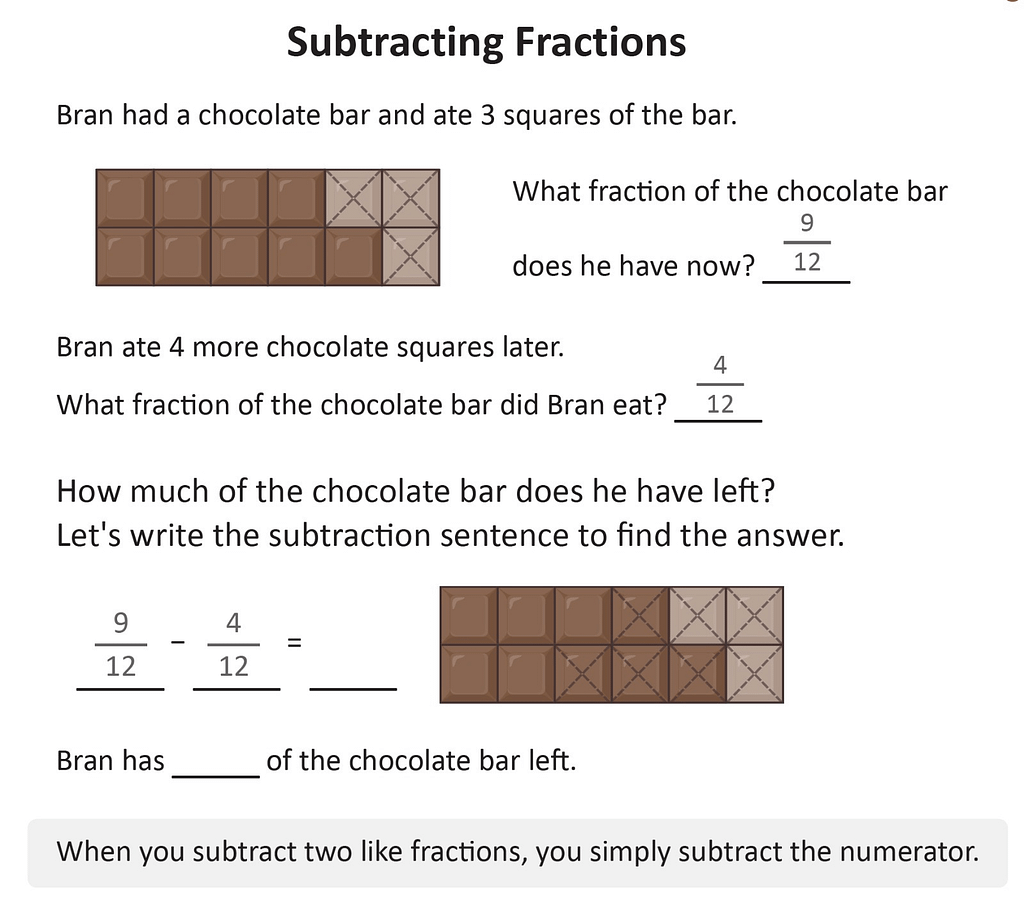
Now, let’s take a look at how we can subtract like fractions.

Suppose Bran had a chocolate bar and ate 3 squares of the bar.

fraction graph

Bran has  of the chocolate bar left.

Again, when you subtract two like fractions, you simply subtract the numerator and keep the denominator unchanged.

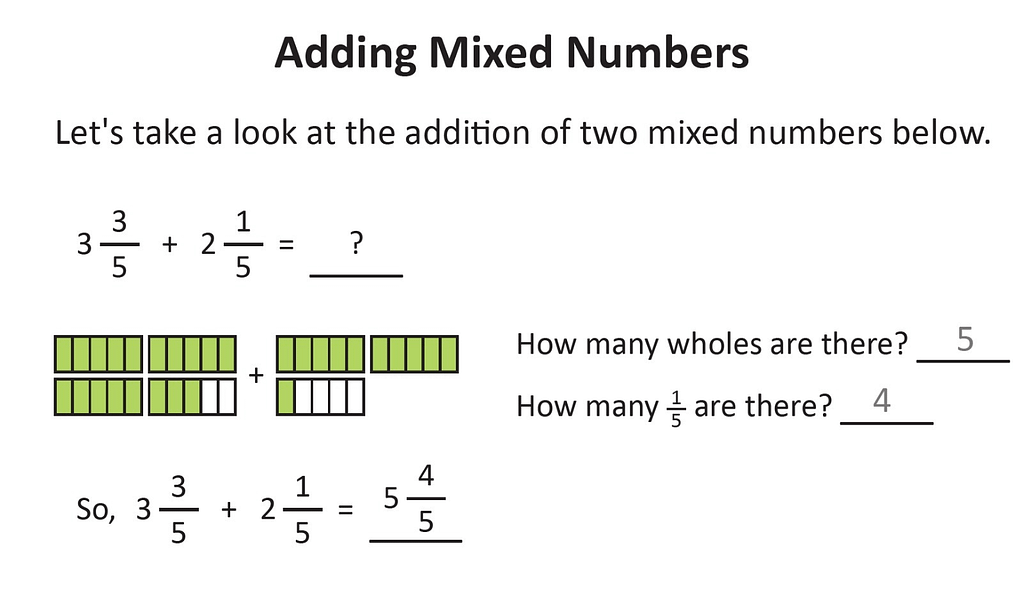
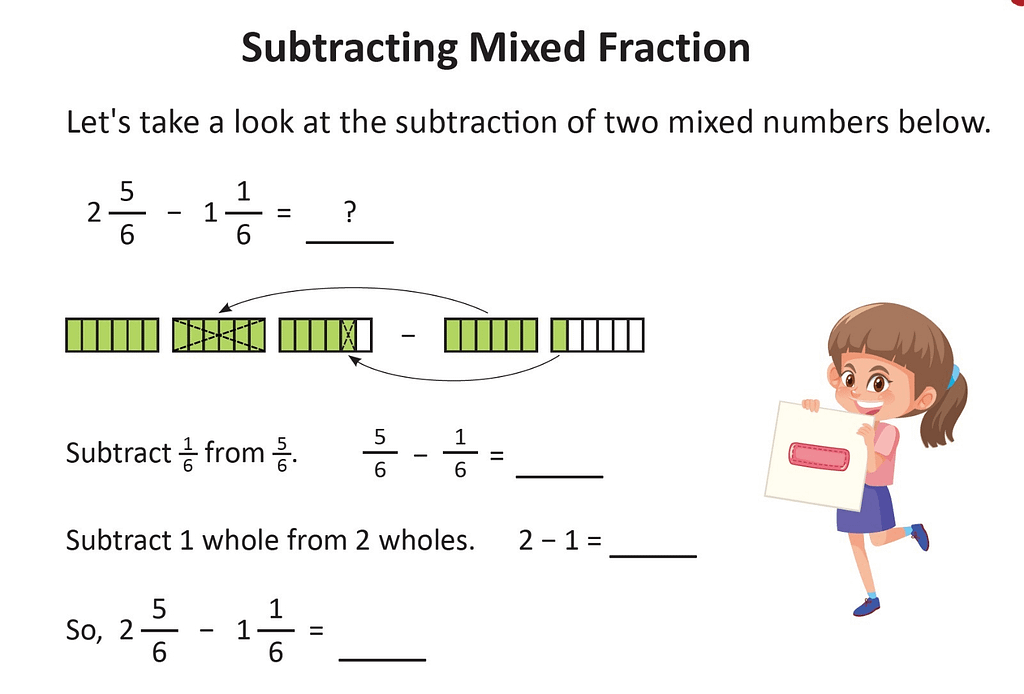
Let’s dig a bit deeper! How do we add or subtract mixed numbers?

Let’s take a look at the addition of two mixed numbers below.

fraction graph 8

Now, let’s take a look at the subtraction of two mixed numbers below.

fraction graph

Practice Makes Perfect!

  • Solve practice problems regularly to solidify your understanding of fractions.
  • Use online resources, games, and apps to make learning more engaging.
  • Feel free to seek assistance from teachers, tutors, or classmates without hesitation.

By following these steps and consistently practicing, you can master elementary fractions and build a strong foundation for future mathematical learning. Remember, patience, perseverance, and a positive attitude are key!

Need help with elementary Math? Reach out to the PALS Learning Center today!

Tips for Parents to Help Kids Stay Motivated and Engaged During Winter Break

tips-for-parents to-help-kids

School breaks are a welcome respite for kids and parents alike, but they can also be a time of boredom and inactivity. Winter break, in particular, can be challenging as the cold weather keeps kids cooped up inside. But there are plenty of things parents can do to help their children stay motivated and engaged during their time off from school.

Create a flexible schedule

Don’t let the break turn into a free-for-all. Having some structure to the day will help kids keep their minds active and avoid getting too bored. But don’t be too rigid, either. Allow for some flexibility and downtime so that kids can relax and recharge.

Encourage physical activity

Even though the weather is cold, it’s still important for kids to get regular exercise. Encourage them to go outside for walks or play in the snow. If it’s too cold to go out, there are plenty of indoor activities that can get them moving, such as dancing (TikTok can maybe help), playing games, or indoor sports.

encourage-physical-activity

Make time for creative activities

Arts and crafts, music, and writing are all great ways for kids to express their creativity and learn new skills. Set up a craft station at home, or take your kids to a local art class or music lesson.
make-time-for-creative-activities

Encourage reading

Encouraging kids to read is an excellent method for keeping their minds alert and involved. Encourage them to read books that they enjoy, whether it’s fiction, non-fiction, or graphic novels. You can also read aloud to your kids or take them to the library.

Plan outings and activities

Don’t just sit around the house all break. Get out and explore your community! Visit museums, take a hike, go ice skating, or attend a local holiday event.

plan-outings-and-activities

Limit screen time

While it’s okay for kids to have some screen time during the break, it’s important to limit it so that they have time for other activities. Encourage them to take breaks from screens every 20-30 minutes.

Make time for family time

The winter break presents a wonderful opportunity to enjoy meaningful moments with family. Make time for family games, movies, and outings.

Get enough sleep

Kids need plenty of sleep to stay healthy and focused. Make sure they’re getting enough sleep each night during the break.

Be patient and understanding

Winter break can be a challenging time for kids, especially if they’re used to a more structured routine. Be patient and understanding if your child is having a hard time adjusting.

Additional tips

Since you got this far on our blog, here are additional tips that you can also apply this winter break:

  • Involve your kids in planning activities for the break. This will give them a sense of ownership and make them more likely to participate.
  • Be flexible and willing to change plans if something isn’t working.
  • Don’t put too much pressure on your kids to be productive. The break is a time for them to relax and have fun.
  • Most importantly, focus on enjoying the time together as a family.

Make it fun!

The most important thing is to make the winter break fun for your kids. Let them choose activities that they enjoy, and don’t be afraid to get silly.

By following these tips, you can help your children stay motivated and engaged during the winter break and have a fun and memorable experience.

Punctuation Pitfalls: Common Punctuation Mistakes You’re Probably Making

Common Punctuation Mistakes You're Probably Making

Punctuation is the unsung hero of written language. Its absence or misuse can significantly alter the meaning of a sentence, turning a clear message into a confusing jumble of words. Despite its importance, many of us tend to stumble when it comes to using punctuation marks correctly. Let’s dive into some common punctuation mistakes that you might not even realize you’re making and how to avoid them.

The Dreaded Apostrophe Catastrophe

Ah, the apostrophe—the tiny mark that causes no end of confusion. One of its main roles is to indicate possession or contraction, yet it’s often misplaced. For instance, confusing “its” (possessive) with “it’s” (contraction for “it is”) is a frequent blunder. Remember: apostrophes never create plurals, so “apple’s” is possessive while “apples” is plural.

Comma Chaos

Commas are versatile but tricky. Their misuse can alter the flow and meaning of a sentence. A common mistake is the comma splice—using a comma to join two independent clauses without a coordinating conjunction. For instance, “She loves hiking, she goes every weekend.” A solution? Use a semicolon, conjunction, or separate the clauses into individual sentences. Like this:

“She loves hiking; she goes every weekend.”

The Enigmatic Ellipsis…

The ellipsis holds an air of mystery—it signifies omission, pause, or suspense. However, its casual use in informal writing can lead to ambiguity. When using it to show omitted text, ensure it doesn’t change the original meaning. In formal writing, limit its use to quoted material and use it sparingly to maintain its impact.

Dashes and Hyphens: Mind the Gap

Dashes and hyphens might seem interchangeable, but they serve different purposes. Hyphens join words in compound adjectives (e.g., well-known) or numbers (e.g., twenty-one). On the other hand, dashes—em or en—are used for interruptions, emphasis, or setting off elements within a sentence. Be cautious not to overuse them; they can interrupt the flow if used excessively.

Colon and Semicolon Sophistication

Colons and semicolons often intimidate writers, leading to their underutilization or misuse. A colon usually introduces a list or elaborates on a preceding statement. Semicolons, on the other hand, connect related independent clauses. Knowing when to use them adds sophistication to your writing and enhances clarity.

Quotation Marks Uncertainty

Quotation marks can enclose direct speech, titles, or indicate irony. Misplacement or inconsistency in their use can lead to confusion. Remember that punctuation typically goes inside the quotation marks in American English but outside in British English, except for colons and semicolons.

“He said, ‘I’m going out’, and slammed the door.

Wait, where’s the closing quote? Don’t leave your dialogue hanging! Every opening quote needs a matching closer, even if it’s on the next line. And remember, periods and commas go inside the quotes, while question marks and exclamation points only belong there if they’re part of the spoken word. Therefore, it should be:

“He said, ‘I’m going out,’ and slammed the door.”

Wrapping Up

Punctuation, though small in size, plays a colossal role in conveying meaning accurately. Mastering its usage is an ongoing journey, but being aware of common mistakes is a significant step forward. Proofreading and a keen eye for detail are your allies in the quest for impeccable punctuation. So, next time you put pen to paper or fingers to keyboard, give your punctuation the attention it deserves—you’ll craft clearer, more effective communication.

Remember, even the best writers make mistakes, but with practice and awareness, you can conquer the punctuation pitfalls and elevate your writing to new heights!

Looking to refine your English skills further? At PALS Learning Center, we offer comprehensive English programs designed to enhance your language proficiency. From grammar fundamentals to advanced writing techniques, our expert instructors provide tailored guidance to help you excel. Visit PALS Learning Center today and embark on your journey to fluent and confident English expression!

Paving the Way to Excellence: Exploring the Foundations with PALS

Building Foundations: PALS Curriculum in Math and English

If you think your child might benefit from having a math and/or English tutor, look no further than PALS Learning Center. Our curriculum will help unlock your child’s academic potential with advanced teaching techniques and personalized math and English tutoring in Edison and surrounding areas. We are proud of our track record in helping many K-12 students succeed in their academics by building their confidence and fostering a love for learning.

NJ Common Core aligned

PALS Math and English are delivered based on a modern curriculum aligned with NJ Common Core. Our comprehensive math curriculum is focused on problem-solving skills, proficiency, and conceptual understanding so your child can create a stronger foundation on the subject and be ready for challenging problems down the road. Our English program helps students build on their reading and writing skills and excel in language.

Spiral learning, one step at a time

We instill essential math skills in small steps to help your child understand them well. We also build on the skills your child learns from the previous weeks to help them learn new ones while retaining and applying what they have learned previously. The goal of our tutors is to boost your child’s confidence while motivating them to achieve academic excellence.

Comprehensive, personalized tutoring

At PALS Tutoring Center, we recognize your child’s unique learning style. That’s why our math and English tutoring services in Edison can be customized to their needs. Our comprehensive tutoring programs cover kindergarten to sixth-grade math, with different levels to help your child deepen their understanding of mathematical elements. This way, they can be more confident as they move to more advanced subjects like calculus and algebra.

Meanwhile, PALS English offers structured lessons in reading and language strategies. With our tutors, we can help your child become a more proficient reader and communicator.

Schedule an appointment here to learn more about our math and English tutoring in Edison, or pre-register your child on this website. You can also connect with us by calling +1 732 777 7997.

PALS Learning Center: Elevating Education Beyond Ordinary Tutoring

PALS Learning Center: Elevating Education Beyond Ordinary Tutoring

Some young students require extra help to improve their grades or advance in certain subjects. PALS Learning Center stands out among tutoring centers thanks to our unique supplementary education system. We specialize in tutoring in Edison, offering personalized study programs tailored to each learner’s unique needs. Our approach ensures a structured and comprehensive curriculum, building a solid foundation in crucial subjects like English and math.

A step-by-step approach to learning

Our curriculum is carefully designed to establish a strong learning foundation with a step-by-step structure. This method guarantees high-quality, personalized educational experiences for young learners. At PALS Learning Center, we focus on areas where your child can expand their learning opportunities, helping them achieve their academic goals.

Modern curriculum aligned with standards.

We offer tutoring in Edison to help students boost their confidence and reach their academic potential. Believing that every child can excel with proper support and guidance, we follow national standards like NCTM and the New Jersey Student Learning Standards (NJSLS) to ensure effective learning.

Catering to a wide age range

Tutoring in Edison is available for kids from kindergarten through 12th grade. Our tutors are skilled in a wide range of subjects, including reading, science, and writing. We are also equipped to assist students with NJSLA test prep, geometry, AP biology, AP calculus, placement test preparation, and more.

Involving parents in the educational journey

When a student joins our center for tutoring in Edison, we take responsibility for their education and include parents in the process. This approach helps parents make informed decisions about their child’s education, especially regarding matters like middle school placements. The passionate staff at PALS Learning Center is committed to your child’s future and is always available for consultation.

If your child needs tutoring in Edison, schedule an appointment with PALS Learning Center by calling +1 732 7777997 or leaving a message on our website. Let us be a part of your child’s path to academic success.

Building Foundations: PALS Curriculum in Math and English

Building Foundations: PALS Curriculum in Math and English

Math and English are usually the subjects where many students struggle. If your child is having a hard time, you can offer the support they need by signing them up for our math and English tutoring programs. At PALS Learning Center, we offer custom elementary English and elementary math tutoring in Edison to help students enhance their performance and attain academic excellence. Moreover, our personalized tutoring features a comprehensive curriculum aligned with Common Core standards. This way, you don’t have to find different tutoring centers to enrich your child’s learning.

About our English program

PALS English program exposes young learners to challenging reading texts, including a range of nonfiction, fiction, speech, drama, and poetry. However, we go beyond reading by providing structured lessons in reading and language strategies. We recommend our curriculum to students in the early grades to help them master reading and writing simple sentences and words. As students progress, they will be introduced to challenging texts with questions to hone their reading comprehension skills. With our expert teachers, we commit ourselves to helping your child excel in language and reading.

About our math program

Our approach to elementary math tutoring in Edison is unique from other tutorial centers in the area. PALS Math is aligned with NJ Common Core to ensure a modern curriculum that helps students boost academic excellence and performance. Our tutors are focused on enhancing your child’s conceptual understanding, problem-solving skills, and proficiency with numbers. This way, your child can have a stronger foundation on the subject.

For advanced students, our elementary math tutoring in Edison allows them to navigate challenging word problems with confidence. Rest assured that every essential skill we teach in each grade is delivered in small, easy-to-understand steps. Plus, our weekly progress is based on the skills our students learn from the previous weeks, so they can retain what they already know while learning new skills. This way, we hope to motivate learners and build their confidence.

Boost your child’s confidence in math and English by enrolling them in our programs. Call +1 732 777 7997 to learn more about our English and elementary math tutoring in Edison. You may also schedule an appointment at a PALS Learning Center near you here on our website.

What Makes PALS English Different from Other English Programs?

What Makes PALS English Different from Other English Programs?

As parents, we know you’re always on the lookout for that special program that can give your child the edge they need in school—and, ultimately, in life. PALS Learning Center gets that! We’re not just another tutoring center. We’re a community of educators passionate about equipping your little scholars for success.

Why choose us as your English tutors in Edison?

  • A curriculum that grows with your child – While most English tutoring in Edison focuses on basic reading skills, PALS Learning Center takes learning to a whole new level through its structured program in the English language. We nurture critical thinking skills and teach your child how to reason logically, build vocabulary, improve listening skills, and make inferences.

Beyond just reading, we develop strong writing skills by teaching students how to write complete sentences, paragraphs, and, eventually, essays. Our curriculum is designed for students from grade 1 up to the high school level, so your child will always be challenged and engaged.

  • Personalized instruction for optimal learning – At PALS Learning Center, we recognize that every student has their own unique learning style and pace. That’s why our English tutoring in Edison is tailored to meet the needs of each student. Our experienced tutors take time to assess your child’s strengths and weaknesses and then create individualized lesson plans to help them reach their full potential.

From one-on-one sessions to small group instruction, we provide a supportive and nurturing learning environment where students feel comfortable asking questions and making mistakes.

  • A dedicated team of qualified tutors – Our English program is taught by a team of highly qualified and experienced tutors who are committed to your child’s academic success. They possess strong teaching skills, extensive subject knowledge, and the ability to connect with students at different levels. With their passion for education and years of experience, our tutors go above and beyond to ensure that each student receives the best possible instruction.

PALS Learning Center understands that English is a crucial subject for your child’s academic and personal development. With our personalized and comprehensive approach to English tutoring in Edison Piscataway, NJ, you can rest assured that your child will receive the support they need to excel in this highly important skill.

PALS Learning Center: Personalized Learning for Academic Success in Edison and Piscataway, NJ

PALS Learning Center: Personalized Learning for Academic Success in Edison and Piscataway, NJ

Are you a parent searching for a stellar after-school tutoring program inEdison that can help your child get ahead in their academics? At PALS Learning Center, we believe learning should be as fun as playtime and as rewarding as scoring the winning point in a game. We’ve spent over 15 years perfecting our blend of structured curriculum and personalized instruction that makes learning not just effective but enjoyable, too! Here’s why we might just be the perfect academic partner for your child’s journey.

Customized learning paths

We understand that each child is unique and deserves an educational approach tailored to their individual learning style and pace. That’s why we offer personalized study programs designed to meet the specific needs of each student. These customized learning paths allow us to identify and address gaps in your child’s knowledge, reinforce their strengths, and continually challenge them to reach new academic heights. When it comes to after-school tutoring in Edison, our methods ensure your child gets the most out of each session, leading to tangible improvements in their overall academic performance.

Experienced and passionate educators

At PALS Learning Center, we attribute much of our success to our extraordinary team of educators. Our tutors are not only well-qualified and experienced, but they’re also passionate about teaching and are deeply invested in each student’s academic journey. They go above and beyond to create a supportive and inspiring learning environment where students feel motivated to explore, question, and learn. Their ability to make learning relatable and interesting is what sets our after-school tutoring in Edison apart from the rest. With our team of dedicated educators guiding them, your children are sure to thrive academically and develop a love for learning.

Take the next step with PALS Learning Center.

We know how important it is for parents to provide their children with the best education possible. That’s why, here at PALS Learning Center, we take a holistic approach to academic development, putting equal emphasis on academics and character building.

Take a step towards your child’s academic success today by contacting us at PALS Learning Center, where we turn after-school tutoring in Edison into a journey of discovery, growth, and achievement.

Nurturing Young Minds: The Importance of Family Engagement in a Child’s Education

Nurturing Young Minds: The Importance of Family Engagement in a Child's Education

Learning transcends the boundaries of a classroom, evolving into a lifelong journey of education. It’s a continuous process of learning and growth that begins at home and unfolds throughout a child’s life. In this journey, the role of family engagement stands as a cornerstone of success.

Family engagement refers to the active involvement of parents and caregivers in their child’s education. It encompasses a range of activities, from simple acts of encouragement to more direct forms of participation, such as helping with homework, attending school events, and collaborating with teachers.

Research has consistently demonstrated the profound impact of family engagement on a child’s academic achievement, social-emotional well-being, and overall development. When families take an active role in their child’s education, it increases the likelihood that children will:

  • Exhibit higher grades, test scores, and attendance rates
  • Develop stronger self-esteem, motivation, and positive attitudes towards learning
  • Demonstrate better social skills, behavior, and adaptability
  • Experience greater confidence and overall success in school and beyond

The benefits of family engagement extend beyond the individual child to encompass the entire school community. When families are connected to the school, they become invested partners in the learning process, fostering a supportive and enriching environment for all students.

Fostering a Culture of Family Engagement

Creating a strong culture of family engagement requires a collaborative effort between schools, families, and the community.

Schools can take proactive steps to welcome and involve families, such as:

  • Establishing open communication channels and providing regular updates on their child’s progress
  • Organizing workshops and seminars to educate families on educational strategies and resources
  • Creating opportunities for families to volunteer in the classroom or participate in school events
  • Recognizing and appreciating the contributions of families in their child’s education

Families can also play an active role in fostering engagement by:

  • Setting high expectations for their child’s education and communicating these expectations clearly
  • Creating a supportive and stimulating home environment that encourages learning
  • Taking an active interest in their child’s schoolwork and regularly discussing school activities
  • Attending school events and volunteering their time and skills
  • Communicating with teachers and school staff about their child’s progress and concerns

Strong family engagement is not a one-size-fits-all approach. Families have diverse backgrounds, experiences, and preferences, and schools must be sensitive to these differences. By tailoring engagement strategies to meet the unique needs of each family, schools can create a truly inclusive and supportive learning environment.

Conclusion

Family engagement is not merely an add-on to a child’s education; it is an integral component of the learning process. When families and schools or learning centers such as PALS work together, they create a powerful synergy that nurtures young minds and paves the way for lifelong success. By fostering a culture of collaboration and mutual respect, we can empower every child to reach their full potential.