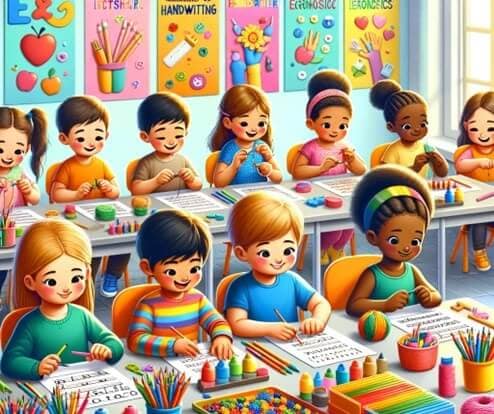

Why Early Learning is Crucial for Children: Insights from PALS Learning Center

early learning is crucial

Introduction

At PALS Learning Center in Piscataway, we recognize the transformative impact of early learning on children’s development. Grounded in extensive research, our approach is designed to optimize the formative years of childhood, setting the stage for lifelong learning and achievement.

The Critical Window for Learning

The early years are a critical period for brain development, with rapid neural growth laying the foundation for future learning, behavior, and health. During this time, over a million new neural connections form each second, which underscores the importance of providing nurturing and stimulating environments during these years​ (Harvard Child Center)​.

Cognitive Benefits of Early Education

Research has consistently shown that high-quality early education significantly improves cognitive outcomes and school readiness. Children who engage in early learning programs exhibit better language, math, and social skills, which contribute to higher IQ scores and enhanced academic performance later in life​ (Brookings)​​ (First Things First)​.

Social Skills and Early Learning

The social skills developed through early education are foundational for lifelong interpersonal abilities. Early educational settings offer unique opportunities for children to learn cooperation, empathy, and problem-solving through interactions with peers, which are essential skills for academic and personal success​​.

Building Confidence Through Early Challenges

Engaging young learners in challenging activities within supportive environments helps build resilience and confidence. Overcoming obstacles and learning from failures during these early years are crucial steps in developing a robust personal and academic foundation​.

How PALS Learning Center Supports Early Learning

At PALS Learning Center, our curriculum is thoughtfully designed to balance academic, social, and emotional development, ensuring each child receives comprehensive support tailored to their developmental needs. Our programs are informed by cutting-edge research, which demonstrates that early investments in education yield substantial returns in educational attainment, employment, and societal contribution​.

Conclusion

Investing in early education is a strategic decision that yields long-term benefits, not only for individual children but also for society at large. At PALS Learning Center, we are committed to providing our students with the tools they need to thrive from an early age, recognizing that the benefits extend far beyond the classroom​.

The Impact of Transition Words: Connecting and Clarifying Your Academic Writing

connecting and clarifying your academic

Struggling to translate your ideas into clear and compelling writing? The culprit might be the lack of transition words. These seemingly small words are actually powerful tools that can guide your reader through your thoughts and create a smooth, cohesive flow. A writing tutor in Edison can help you use transition words effectively.

Transition words are, in essence, words that connect and clarify your writing. They link thoughts and ideas together within and across paragraphs so that your writing flows smoothly. This makes it much easier for your audience to grasp the connections between your points and follow your line of argument.

Connecting your ideas

Transition words serve to connect your different ideas and make them more coherent. For example, you can use transition words like furthermore, in addition, and moreover to introduce new points or to simply add more information to your argument.

Another common use of transition words is to show the contrast between ideas. For instance, you can use, however, nevertheless, or on the other hand, to introduce a conflicting viewpoint or argument.

Improved readability

In academic writing, if your audience can’t follow your thought process, then they may not be able to understand your argument. Worse, they may get confused and lose interest. Transition words help signify when a new idea, argument, or line of reasoning is coming up, allowing your audience to mentally prepare for the shift. You can use transition words such as in other words to clarify or specifically to indicate that you’re about to define, explain, or provide more details on a specific point.

Better cohesion

Using transition words can also improve the cohesion of your writing. This means that all the different parts of your essay or thesis are connected and work together to support your main argument. Transition words like thus, consequently, or as a result help show the relationship between different ideas and how one leads to another.

A writing tutor in Edison from the PALS Learning Center can help you effectively incorporate transition words into your writing. Get in touch with our writing tutor in Edison today at +1 732 777 7997 to get started.

Boost Your Child’s Handwriting Skills: Tips and Techniques for Improved Writing

JALAPENO BEEF OR CHICKEN

Introduction

Good handwriting is crucial for children’s educational development, aiding in better learning and communication skills. As digital devices become more integrated into learning, the importance of handwriting remains undiminished. This blog provides parents with practical, effective tips to enhance their children’s handwriting skills, ensuring they develop a clear and legible style.

Choose the Right Tools

Select Appropriate Writing Instruments: The pen or pencil should fit comfortably in a child’s hand. For younger children, chunky, grip-fitted pencils can help control writing movements. For older children, finding a pen that glides smoothly can reduce hand strain and improve writing fluency​.

Opt for Proper Paper: Thick, lined paper can help guide writing and prevent ink bleeding. Raised lines or textured paper can also provide tactile feedback to help children stay within the lines​.

Establish Ergonomics

Correct Sitting Posture: Ensure that your child sits at a well-lit desk with their feet flat on the floor. Their writing surface should be stable and at a comfortable height to prevent slouching.

Proper Hand and Body Position: Teach your child to hold the pencil correctly. The tripod grip, where the pencil is held between the thumb, index, and middle finger, is ideal. The paper should be tilted slightly to align with the writing arm, improving handwriting clarity and preventing wrist twisting​.

Engage in Fine Motor Skill Activities

Enhancing fine motor skills is crucial for improving handwriting. Engage your child in activities such as:

  • Clay modeling
  • Bead threading
  • Cutting shapes with safety scissors
  • Drawing and coloring These activities build the small muscles in the hands and fingers, essential for good handwriting​ (SplashLearn).

Integrate Fun Writing Exercises

Creative Writing Tools: Use colorful markers, scented pens, and shaped papers to make the writing process more exciting and engaging for your child.

Handwriting Games: Incorporate games like “Sky, Grass, Dirt” to teach proper letter formation. This visual and interactive method helps children remember where each part of the letter should sit on the line​ (Understood)​​ (The Inspired Treehouse)​.

Practice Regularly But Keep It Light

Consistent Practice: Set aside short, regular practice sessions. Consistency is more effective than length. Aim for 10-15 minutes of focused practice a day.

Avoid Fatigue: Keep sessions lively and end them before your child becomes tired or frustrated. This keeps the experience positive and encourages them to look forward to practice time.

Provide Positive Feedback

Encourage Efforts: Celebrate improvements, no matter how small. Positive reinforcement motivates children to continue practicing and improving.

Set Achievable Goals: Help your child set realistic handwriting goals, such as mastering the curve of a particular letter or improving the spacing between words.

Conclusion

Improving handwriting is a gradual process that benefits greatly from encouragement, proper tools, and consistent practice. By integrating these practical tips into your daily routine, you can help your child develop robust handwriting skills that will serve them well throughout their academic career and beyond.

Embrace these strategies to transform handwriting practice into a rewarding and productive part of your child’s educational journey.

STEM Opportunities: Encouraging Exploration and Curiosity in Middle School

stem in middle school

Introduction

Middle school marks a critical phase in education where students transition from basic understanding to deeper intellectual engagement, particularly in Science, Technology, Engineering, and Mathematics (STEM). This stage is crucial for sparking interest in STEM through innovative and practical learning experiences.

The Importance of STEM in Middle School

Middle school is an ideal time to engage students in STEM because their curiosity peaks and they begin to grasp complex problems that these subjects present. Engaging students in activities that connect their everyday experiences with science and technology not only maintains their interest but also helps develop critical thinking skills which are essential for future academic and career success​ (STEM in the Middle)​.

Practical Applications and Real-World Problem Solving

At the heart of effective STEM education is its emphasis on real-world applications. This approach not only makes the learning process engaging but also relevant. Schools can enhance their STEM curriculum through hands-on projects like robotics or environmental science clubs that solve real community issues, thereby making the lessons more tangible and impactful​.

STEM and Career Preparation

Exposing students to STEM fields can significantly influence their career paths, with many future jobs requiring a solid foundation in these areas. Middle school programs that introduce students to technology and engineering can spark early interest in these high-demand fields​ (STEM Education Guide)​. Additionally, practical experiences in computing and applied sciences can set students on a path to fulfilling and lucrative careers​ (Harvard Gazette)​.

Edison Academy and Woodbridge Academy

Local programs such as those at Edison Academy and Woodbridge Academy offer specialized pre-college preparation that aligns well with STEM objectives. At Edison Academy, the focus is on integrating technology with traditional learning to enhance students’ problem-solving skills. Woodbridge Academy, however, focuses on allied health and sciences, providing a collaborative environment that prepares students for advanced careers in healthcare and scientific research.

Supporting Magnet and Academy School Prep at PALS

At PALS Learning Center, we understand the importance of excelling academically throughout middle school to prepare for specialized STEM schools. Our comprehensive Math, English, Reading and Writing programs are specifically designed to help students achieve and maintain high grades, providing a solid foundation for academic success. These programs not only prepare students for the challenging entrance exams required by Magnet and Academy schools but also give them a competitive edge in their applications.

Specialized Test Prep for 8th Graders

Additionally, PALS offers targeted test prep classes specifically designed for 8th-grade students preparing for Magnet and Academy school admissions in the fall academy year. These classes support students in excelling on the entrance exams required by these schools, ensuring they are well-prepared to meet the demands of advanced educational opportunities and excel in their future academic endeavors.

Conclusion

The integration of STEM into middle school curricula is not just about preparing students for the next educational step; it’s about opening doors to new opportunities that align with the evolving job market and technological advancements. Programs and schools that offer advanced STEM education, like Edison and Woodbridge Academies, play a pivotal role in shaping the future of our students and the broader societal landscape.

For more detailed information about the programs at Edison Academy and Woodbridge Academy, you can visit their respective websites Edison Academy and Woodbridge Academy.

What’s New on the Reading & Writing Section of the Digital SAT?

massage therapy services

The SAT has been a cornerstone of college admissions for over 60 years. However, the landscape of education and college admissions is evolving, and the SAT is adapting to keep pace with these changes.

Get ready to go digital.

The Reading and Writing section of the SAT will be administered electronically starting in 2024. This doesn’t mean that students can take the exam from home, though — testing will still take place at designated schools or official test centers, but instead of the traditional paper and pencil, students will answer questions on a computer or tablet using a secure app called Bluebook. The College Board will provide devices to students who don’t have their own.

More personalized test experience

The digital format offers a cool new feature called “multi-stage adaptive design.” Here’s how it works: After completing the first set of questions, a computer analyzes the answers. Based on the test taker’s performance, the difficulty level of the following questions is adjusted. This tailors the test to the student’s individual skill level and creates a more accurate assessment of their knowledge.

Shorter test, more focus

There are significant changes to the Reading and Writing section in the revised SAT. Test-takers will spend 32 minutes tackling 27 questions in each part, for a total of 64 minutes. This is quite a change compared to the previous format, which took a total of 1 hour and 40 minutes for both sections. In fact, the old reading section alone was as long as both new parts combined.

Don’t worry if all of these changes sound overwhelming. You can enroll your child in a digital SAT prep course to help them become familiar with the new format and learn how to answer questions efficiently.

A digital SAT prep course can offer a vast library of practice questions that mimic the format and difficulty of the actual SAT. This allows your child to become comfortable with the test style, identify their timing strengths, and develop strategies for tackling different question types. These courses also incorporate interactive elements like video lessons, gamified exercises, and instant feedback to keep your child engaged and motivated throughout the learning process.

Our digital SAT prep course at PALS Learning Center is designed to help students excel in the reading and writing section of the SAT so they can achieve their college goals.

Call our team at +1 732 777 7997 to inquire about our digital SAT prep course.

The Benefits of Long-Term Private Tutoring: Unveiling the Top Rewards

unveiling the top rewards

Traditional classrooms often struggle to cater to diverse learning styles. Limited time and resources can restrict teachers from using a variety of instructional methods. This mismatch between teaching style and how a student learns can leave many students feeling lost and unsupported.

This is where tutoring comes in. If you’re currently wondering if tutoring in Edison is a good investment for your child’s future, the following benefits may help you decide.

  1. Tutors can tailor their teaching methods to your child’s learning style.

A private tutor can design lessons that suit how your child likes to learn. For instance, does your child thrive on seeing things to understand? A tutor can incorporate engaging pictures, diagrams, and even hands-on activities to bring concepts to life. Does your child learn best by listening? A tutor can create engaging explanations and discussions and even use audio resources.

  1. Tutors can focus on your child’s individual needs

In a busy classroom setting, it can be challenging for teachers to give each student the individualized attention they deserve. But with tutoring in Edison, your child gets all the attention. It provides a one-on-one or small group environment that allows the tutor to fully focus on your child’s specific needs and learning style.

Are they struggling with a particular topic? Tutors can dedicate extra time to areas your child finds challenging to ensure that they grasp the material before moving on.

Tutors can also identify your child’s strengths and weaknesses early on, allowing them to tailor a targeted approach that builds a strong foundation for future learning success. With a personalized approach and focused attention, your child can learn and retain information at a faster pace compared to a larger class setting.

  1. Tutoring teaches accountability and responsibility

Working with a tutor allows your child to collaborate on setting achievable learning goals, giving them a sense of ownership and responsibility for their academic journey. By taking an active role in their learning, your child develops valuable skills like self-awareness, goal setting, and a love for tackling challenges — all of which benefit them far beyond the classroom.

For expert and reliable tutoring in Edison, PALS Learning Center offers customized programs for students of all ages. With our personalized approach, we ensure that your child gets the help they need to excel academically and reach their full potential.

Call us at +1 732 777 7997 to learn more about our tutoring in Edison.

Unlocking the World of Classic Literature: Essential Reads for Elementary Students

world of classic literature

Classic literature has long been celebrated for its ability to transport readers to different times, places, and perspectives. While some may perceive these timeless tales as reserved for older readers, there’s a treasure trove of classic literature perfectly suited for elementary students. Introducing children to these literary masterpieces at a young age not only cultivates a love for reading but also fosters critical thinking and empathy.

In this blog, we’ll explore a curated list of must-read classic books tailored specifically for elementary students, offering both parents and students a gateway to a world of imagination and wisdom.

“Charlotte’s Web” by E.B. White

E.B. White’s enchanting tale of friendship between a pig named Wilbur and a spider named Charlotte is a timeless classic that resonates with readers of all ages. Elementary students will be captivated by the heartwarming story of loyalty, sacrifice, and the beauty of true friendship. As they follow Wilbur’s journey from the brink of doom to becoming a prize-winning pig, children will learn valuable lessons about empathy, kindness, and the circle of life.

You can read it online by clicking this link.

“The Adventures of Tom Sawyer” by Mark Twain

Mark Twain’s iconic novel invites elementary students into the mischievous world of Tom Sawyer, a spirited young boy with a knack for adventure. Set along the banks of the Mississippi River, this coming-of-age story is brimming with excitement, humor, and unforgettable characters. From exploring caves to outsmarting villains, Tom Sawyer’s escapades will ignite children’s imaginations while imparting timeless lessons about bravery, friendship, and the joys of childhood.

Read it online by clicking this link.

“Alice’s Adventures in Wonderland” by Lewis Carroll

Lewis Carroll’s whimsical masterpiece takes readers on a fantastical journey down the rabbit hole with Alice, a curious young girl who stumbles into a magical world filled with eccentric characters and nonsensical wonders. Elementary students will delight in the absurdity and imagination of Wonderland, where nothing is quite as it seems. Through Alice’s encounters with the Mad Hatter, the Cheshire Cat, and the Queen of Hearts, children will uncover themes of curiosity, identity, and the power of imagination.

You can read it here.

“The Wind in the Willows” by Kenneth Grahame

Kenneth Grahame’s classic tale follows the adventures of Mole, Rat, Badger, and Toad as they navigate the idyllic countryside of Edwardian England. Filled with charming anthropomorphic characters and lush descriptions of the natural world, “The Wind in the Willows” is a delightful read for elementary students. Through the trials and triumphs of its animal protagonists, children will learn valuable lessons about friendship, courage, and the importance of home.

Want to read? Click here.

“Charlie and the Chocolate Factory” by Roald Dahl

Roald Dahl’s deliciously imaginative tale invites elementary students into the whimsical world of Willy Wonka’s chocolate factory, where dreams come true and surprises lurk around every corner. As Charlie Bucket embarks on a once-in-a-lifetime adventure alongside four other lucky children, readers will be spellbound by Dahl’s witty prose and outlandish characters. With its themes of perseverance, integrity, and the power of imagination, “Charlie and the Chocolate Factory” is sure to delight and inspire young readers.

Read this book by clicking here.

Conclusion

Introducing elementary students to classic literature opens up a world of imagination, wisdom, and wonder. By exploring timeless tales such as “Charlotte’s Web,” “The Adventures of Tom Sawyer,” “Alice’s Adventures in Wonderland,” “The Wind in the Willows,” and “Charlie and the Chocolate Factory,” children can embark on literary adventures that entertain, educate, and inspire. So, dive into these timeless classics with your young readers and watch as their love for literature blossoms with each turn of the page.

Exploring Geometry: Real-Life Applications and Examples

real life applications and examples

Geometry is often regarded as a branch of mathematics that deals with shapes, sizes, and the properties of space. While it might seem abstract at first, the principles of geometry have numerous real-life applications that we encounter every day. From architecture to art, from navigation to technology, geometry plays a vital role in understanding and shaping our world.

In this blog, we’ll delve into some fascinating real-life applications of geometry, accompanied by examples that illustrate its significance in various fields.

Architecture and Design

One of the most obvious applications of geometry is in architecture and design. Architects rely on geometric principles to create structures that are not only aesthetically pleasing but also structurally sound. From the symmetry of a building’s facade to the calculations involved in determining load-bearing capacities, geometry is fundamental to the entire design process.

Example: The Parthenon, an ancient Greek temple dedicated to the goddess Athena, is a stunning example of geometric precision in architecture. Its columns are not only perfectly spaced but also slightly curved to give the illusion of straight lines. The dimensions of the Parthenon follow the principles of the golden ratio, a geometric proportion often found in nature and revered for its aesthetic appeal.

Engineering and Construction

Engineers heavily rely on geometry when designing and constructing various infrastructure projects, such as bridges, tunnels, and roads. Understanding geometric concepts like angles, symmetry, and proportions is essential for ensuring the safety and functionality of these structures.

Example: Suspension bridges, like the Golden Gate Bridge in San Francisco, showcase the intricate use of geometry in engineering. The catenary curve, a natural shape formed by a hanging chain, is employed to design the cables that support the bridge deck. By understanding the geometry of forces and tensions, engineers can create stable and durable structures capable of withstanding immense loads.

Art and Design

Geometry has long been a source of inspiration for artists and designers. From the intricate patterns of Islamic art to the geometric abstraction of modern art movements, geometric shapes and principles are ubiquitous in artistic expression.

Example: The work of Dutch artist Piet Mondrian is a striking example of geometric abstraction. Mondrian’s compositions feature primary colors and straight lines arranged in perpendicular and parallel configurations. His use of geometry reflects a quest for universal harmony and order, transcending mere representation to evoke deeper philosophical concepts.

Navigation and Cartography

Geometry plays a crucial role in navigation and cartography, the science of mapmaking. By understanding geometric principles like angles, distances, and coordinates, cartographers can accurately represent the Earth’s surface on maps and charts.

Example: The Mercator projection, developed by Flemish cartographer Gerardus Mercator in the 16th century, revolutionized navigation by preserving angles and shapes across the map. While it distorts the size of landmasses at higher latitudes, the Mercator projection remains invaluable for navigators because it represents lines of constant compass bearing as straight lines.

Technology and Innovation

In the digital age, geometry is at the heart of computer graphics, animation, and 3D modeling. From video games to virtual reality simulations, geometric algorithms and techniques enable the creation of immersive virtual worlds and realistic simulations.

Example: Computer-aided design (CAD) software, such as AutoCAD and SolidWorks, relies on geometric modeling to create precise representations of objects and structures. Engineers and designers use these tools to visualize, analyze, and iterate on their designs before fabrication, saving time and resources in the product development process.

Conclusion

Geometry is not just an abstract branch of mathematics; it’s a practical tool with countless real-life applications. Whether you’re admiring the symmetry of a Gothic cathedral, navigating using a map and compass, or designing a digital masterpiece, geometry is at work all around us. By exploring its applications and examples, we gain a deeper appreciation for the role geometry plays in shaping our world and understanding the fundamental principles that govern it. So next time you encounter a geometric shape or concept, take a moment to ponder its significance and marvel at the intricate beauty of our geometric universe.

Engaging Math Games for Middle Schoolers: Blending Fun with Learning

math games for middle schoolers

Middle school is a critical time for shaping a student’s attitudes towards mathematics. While some may find math daunting or boring, integrating fun and educational games into their learning experience can make a significant difference. Interactive activities not only help reinforce mathematical concepts but also foster a positive attitude towards the subject. In this blog, we’ll explore some exciting math games tailored specifically for middle schoolers, designed to make learning math enjoyable and engaging.

Math Bingo

Bingo is a classic game loved by people of all ages, and when infused with mathematical problems, it becomes an excellent tool for reinforcing arithmetic skills. Create Bingo cards with math problems instead of numbers. For example, you might have equations like “3x + 5 = 17” or “4² + 6² = ?” Call out the solutions, and students mark the corresponding answer on their Bingo cards. This game encourages quick mental calculations and improves students’ ability to solve equations.

You can also play Math Bingo online. Click here.

Math Jeopardy

Based on the popular TV game show, Math Jeopardy is a fantastic way to review various mathematical topics in a competitive and engaging format. Divide students into teams and set up a game board with different categories such as Algebra, Geometry, Fractions, and Word Problems. Assign point values to each question based on its difficulty. Teams take turns choosing a category and a point value, then must solve the corresponding math problem within a time limit. Math Jeopardy promotes teamwork, critical thinking, and quick problem-solving skills.

We found this Math Jeopardy game online. Try it now by clicking this link.

Math Puzzles and Riddles

Challenge your students with brain-teasing math puzzles and riddles that require creative thinking and problem-solving strategies. You can find a plethora of math puzzle books or websites offering a wide range of puzzles suited for middle schoolers. These puzzles might involve number sequences, logic problems, or geometric puzzles. Encourage students to work individually or in groups to solve these puzzles, fostering collaboration and perseverance while having fun with math.

Here are 100+ challenging math riddles to keep your mind sharp that we found online.

Math Card Games

Card games are not only entertaining but also provide an excellent opportunity to practice math skills. Games like “24 Game” or “Prime Climb” require players to use arithmetic operations to manipulate numbers on cards to reach a target number or prime numbers, respectively. Additionally, traditional card games like “War” or “Fraction War” can be adapted to reinforce skills in comparing fractions, decimals, or integers. By integrating math into familiar card games, students can enhance their numerical fluency in an enjoyable way.

Math Board Games

Board games offer a hands-on approach to learning math concepts while promoting social interaction among students. Games like “Math Dice,” “Sum Swamp,” or “Möbi” incorporate math into gameplay mechanics, challenging players to use their mathematical skills to advance through the game. These board games cover a wide range of mathematical topics, including addition, subtraction, multiplication, division, fractions, and even algebraic equations. Playing math board games not only reinforces mathematical concepts but also enhances strategic thinking and decision-making abilities.

Conclusion

Incorporating fun and educational math games into the learning journey can significantly benefit middle school students by making math more enjoyable and accessible. These interactive activities not only reinforce mathematical concepts but also foster essential skills such as critical thinking, problem-solving, and collaboration. By engaging students in entertaining math games, educators can help instill a positive attitude towards mathematics, paving the way for future success in this vital subject. So, let’s turn math learning into an exciting adventure for our middle schoolers!

Does your middle school kid need help learning math? Contact us now!

Overcoming Math Word Problem Anxiety

math word problem anxiety

Does your child struggle with math word problems? They might feel overwhelmed by numbers, terms, and sentence structure, leading to anxiety about getting the wrong answer. This is a common issue, and many parents seek tutoring services and math homework help for exactly this reason.

At PALS Learning Center, we use a curriculum aligned with the NJ Common Core that tackles the root of word problem anxiety. Here’s how:

  • We focus on conceptual understanding to help students grasp the mathematical concepts behind the problems. This makes applying formulas and calculations more intuitive.
  • We teach your child a systematic approach to analyzing and solving math problems by breaking them down into manageable steps.
  • Our curriculum uses small, focused steps to introduce new skills and build upon previous learnings. This spiral learning approach increases confidence and mastery.

With a stronger foundation, problem-solving tools, and the confidence gained through practice, your child will be well-equipped to tackle even the most challenging word problems.

Not just for higher grades

Looking to boost your child’s math confidence and test scores? We go beyond just grades, helping kids build a strong foundation in math so they can tackle challenges with ease. Our focused math homework help and tutoring services provide a focused learning environment where your child can get the extra support they need to thrive in math, both inside and outside the classroom.

Access the best math tutoring for your child.

Here at PALS Learning Center, we recognize that every child has a different learning style and that this style may evolve as they age. This is why we carefully tailor our math homework to help with their individual needs in mind.

Our tutoring plans are designed to improve their foundational math skills while overcoming frustrations when solving word problems. During onboarding, we conduct initial assessments to identify your child’s overall learning level, weaknesses, and strengths and ensure the tutoring suits their needs. We also conduct interim assessments to see their progress and identify any necessary modifications or deviations in our instruction. We want to make sure your child is getting the crucial math skills and knowledge.

How to support your child

As a parent, you can also do your part in helping ease your child’s math word problem anxiety:

  • Encourage them – Words matter! Offer positive encouragement and affirmations to combat their anxieties. Let them know you believe in their ability to succeed.
  • Help your child stay organized – Help your child develop good study habits by providing a quiet, organized space for learning. This reduces distractions and promotes focus.
  • Don’t invalidate their feelings – Acknowledge that your child is anxious about math word problems and work with them to overcome it without any pressure.
  • Talk to your child’s tutor – Establish open communication with our math tutor and your child to identify any areas that need improvement.

Get in touch with the PALS Learning Center.

Look no further for math homework help. We’ll provide it in a fun and engaging way. Schedule an assessment with us by calling +1 732 777 7997.